
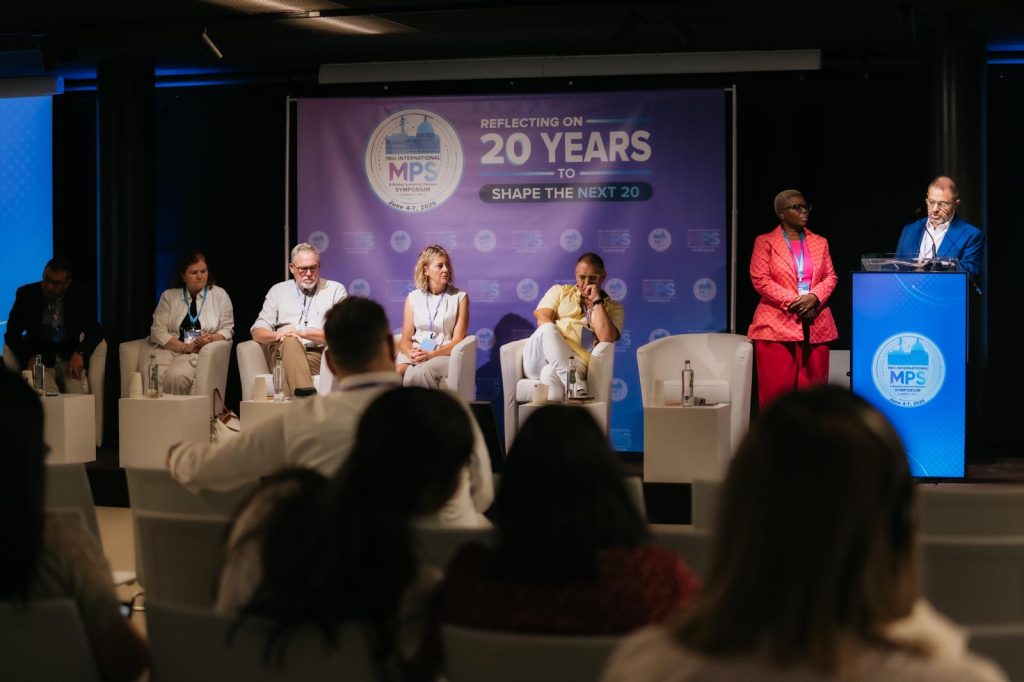
From June 4th to 7th, 2026, we had the privilege of taking part to the 18th International Symposium on MPS and Related Lysosomal Diseases in Florence. This event was a unique gathering of clinicians, patients and families, researchers, and industry partners from across the globe. Being directly involved in a pivotal panel co-moderated by Leonardo Calzetti, our CEO and Founding Partner, offered an invaluable opportunity to explore three interconnected themes critical to the lives of families affected by mucopolysaccharidoses (MPS): newborn screening, equitable access to therapies, and the role of patient data.
Newborn Screening for Mucopolysaccharidoses: What It Means for Families
Our discussions began with newborn screening (NBS) and its profound implications for families. While NBS is often presented in purely clinical terms — a test followed by a result — the panel emphasized that it represents much more than that. For families, it is the start of a structured journey that includes:
- Understanding the value of early detection — knowing what the screening can reveal and the potential benefits of timely intervention.
- Navigating the ethical and emotional dimensions — receiving information about a serious rare disease at birth can be life-changing, creating new expectations, anxieties, and decisions.
- Ensuring real follow-up — connecting families to counseling, confirmatory diagnostics, treatment options when available, and ongoing support.
We reflected on the Italian experience with NBS for MPS, which has shown how coordinated regional pilot programs, engagement with clinicians and institutions, and family-centered communication can create a meaningful and actionable pathway.
Yet, as of today, the benefits of MPS screening are not yet within reach for every newborn. This is where patient advocacy can play a decisive role: calling for and demanding that more countries implement newborn screening. Geography should never determine whether a child ever receives an early diagnosis.
Uneven Access: When the Science Exists but Access Doesn’t
The conversation then turned to global disparities in access to therapies. What became immediately clear is that barriers are not limited to low- and middle-income countries. Even in Europe, families may face delays or outright denials for treatments available elsewhere. Real-world examples presented by panelists from Latin America and Hungary highlighted how regulatory frameworks, reimbursement policies, pricing, hospital capacity, and administrative processes can all shape whether a child receives timely treatment.
We also explored the role of industry and of compassionate use / expanded access programs. While these pathways can bridge gaps temporarily, they are not substitutes for sustainable, equitable access. The discussion highlighted that families deserve transparency, guidance, and advocacy support to navigate these complex landscapes effectively.
Patient Data and Registries: Turning Experiences into Evidence
Finally, we delved into patient data and registries, and how collecting this information responsibly can transform individual experiences into actionable insights. The panel’s message to families was clear: “Your data is your voice in rooms where decisions are made.”
Patient registries enable families to contribute evidence that can guide research, clinical care, treatment access, and healthcare policy. The discussion covered how families can participate safely, the protections in place for privacy, and how these efforts help make otherwise “invisible” patients visible to decision-makers.
This underscored the collaborative nature of progress: data is not just about research, but about giving families a tangible voice in shaping care pathways and policies.
Lessons and Takeaways
Reflecting on the past 20 years, the panel acknowledged significant advances in MPS diagnosis, treatment, and advocacy. Despite many aspects remain to be addressed, we collected some key insights, reported here:
- Early diagnosis matters only if it leads to actionable care and support.
- Access to therapies is uneven, even in high-income countries; advocacy and systemic solutions are essential.
- Patient data is a powerful tool, making experiences visible and influencing research, policy, and access.
The Florence Symposium demonstrated that true progress requires collaboration across clinicians, regulators, industry, and patient communities. Involving families directly in these discussions ensures that innovations and policies reflect real needs and lived experiences.
Ultimately, progress in MPS is not just about science or policy. It is about listening, including, and acting with the families whose lives are affected. And we are grateful for the opportunity to have been part of this event.